The East Asian form of Avalokiteshvara, the bodhisattva associated with compassion and aid for beings in need.
The bodhisattva who hears the world
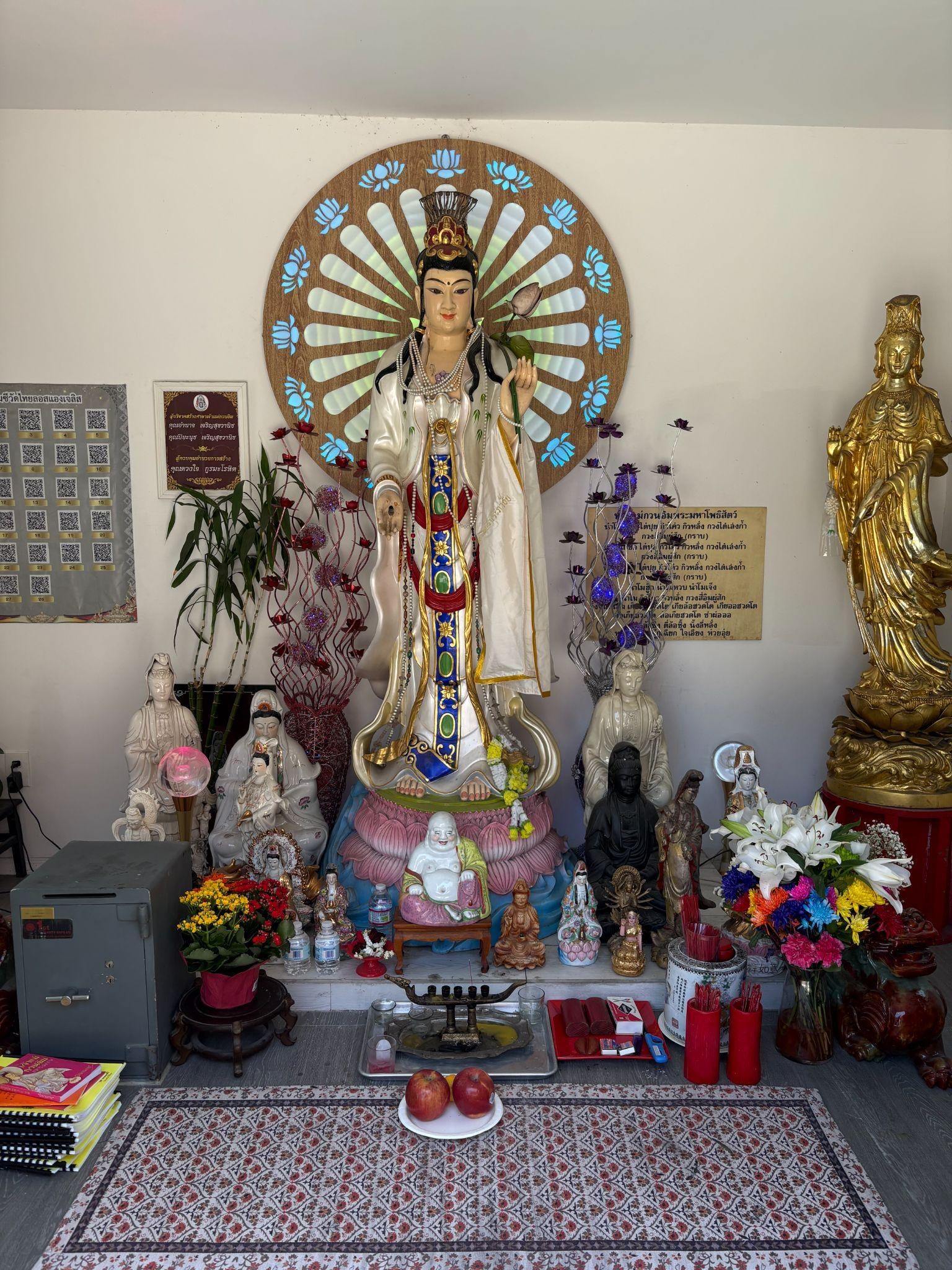
Guanyin is the Chinese name for Avalokiteshvara, the bodhisattva of compassion. As Buddhism traveled across Asia, representations changed; in China, Guanyin came to be portrayed frequently in feminine form.
A popular traditional legend identifies Guanyin with Princess Miao Shan, whose compassion endures despite her father’s opposition. This is a devotional legend rather than a historical biography.
Compassion expressed in many forms
Guanyin images emphasize attentive compassion—the willingness to recognize suffering and respond to it. The many forms of the bodhisattva across cultures reflect the idea that compassionate aid can meet people where they are.
What to notice during your visit
- Look for the lotus flower, white robes, and the smaller Guanyin figures arranged around the central image.
- Keep a respectful distance from the altar and avoid moving offerings or devotional objects.
Article credit
Author: Aidan Pao