A 10th-century Chinese Chan monk remembered for his laughter, a cloth bag of belongings, and generous care for people in need.
The monk who carried a cloth bag
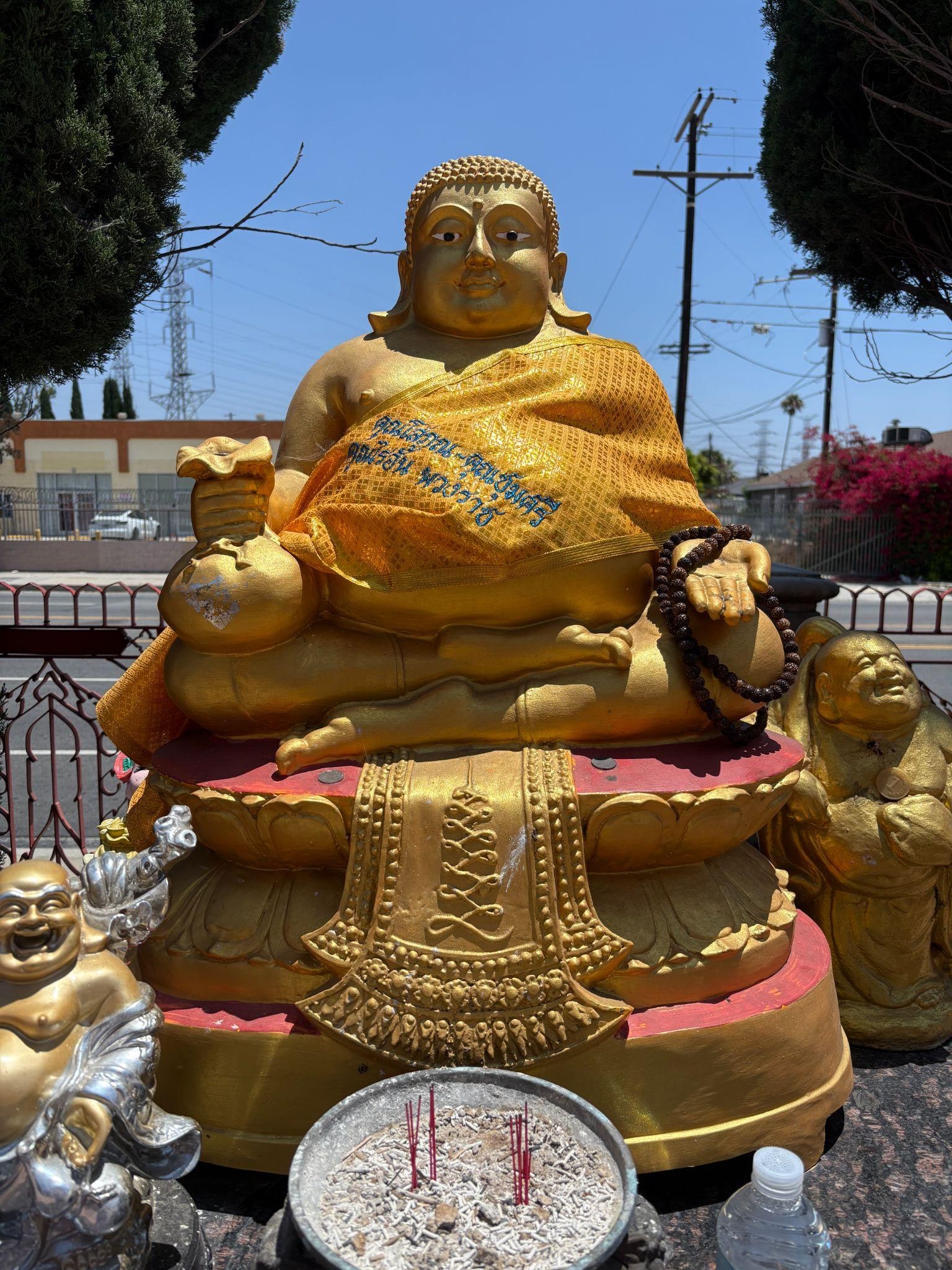
Budai was a Chinese Chan (Zen) monk of the 10th century, known for lightheartedness and exuberant laughter. Images show a heavyset, bald figure carrying a sack with his few belongings. His name means “cloth bag” in Chinese.
Stories remember him as a generous and compassionate bodhisattva who brought food to the hungry, sweets to children, and medicine to the sick. Many Buddhists identify him as an incarnation of Maitreya, the future Buddha.
A smile that stays in the present
Budai’s smile is often read as an invitation to let go and meet what is immediately in front of you. The cloth bag and open expression point toward generosity, contentment, and a lightness that does not wait for a more perfect moment.
What to notice during your visit
The golden seated image is accompanied by smaller laughing Budai figures and everyday offerings at its base.
- Look for the cloth bag in his right hand, the prayer beads, and the smaller laughing figures placed at the pedestal.
- If incense or other offerings are present, keep a respectful distance and do not move them.
Article credit
Author: Aidan Pao